Your teenager slammed the door again. Or maybe they're sitting at dinner, scrolling through their phone, barely acknowledging you exist. You want to connect, but every conversation feels like navigating a minefield.
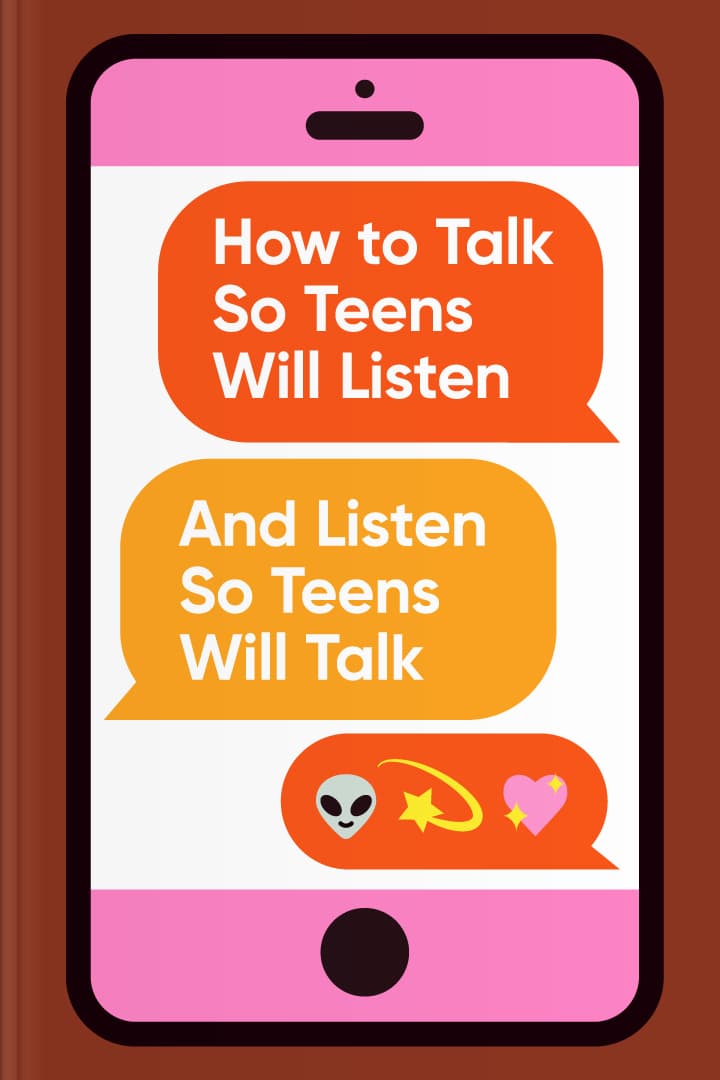
Books about adolescence offer something most parenting advice misses — they explain what's actually happening inside your teen's brain. Alexandra Robbins' 'The Geeks Shall Inherit the Earth' shows how social hierarchies shape teenage identity. Adele Faber and Elaine Mazlish's 'How to Talk So Teens Will Listen & Listen So Teens Will Listen' gives you phrases that actually work. Lisa Damour's 'Untangled' maps the emotional chaos of teenage girls with clarity that makes you think, "Finally, someone gets it."
Books about adolescence for parents who feel lost
When you read books about adolescence, you stop taking everything personally. That eye roll? It's not about you.
Damour explains in 'Untangled' how teenage girls pull away from parents as a developmental necessity, not a rejection. She breaks down the seven developmental tasks girls face, from forming an identity separate from their parents to navigating intense friendships. You see patterns instead of problems.
Robbins takes a different angle in 'The Geeks Shall Inherit the Earth.' She followed seven students through a school year, revealing how labels like "nerd" or "popular" create real psychological pressure. Teens don't just want acceptance — they're trying to figure out who they are when everyone around them is judging. The book shows parents why their teenager might obsess over fitting in or why being different feels terrifying.
Here's what these books do: they give you language for confusing behaviors. When your teen suddenly hates everything they used to love, you'll understand it's not ingratitude. It's identity formation.
Books on adolescence that change how you communicate
Most parent-teen conflicts aren't about the issue at hand. They're about how you're talking to each other. Books on adolescence teach you to decode what your teenager actually means versus what they're saying.
Faber and Mazlish's 'How to Talk So Teens Will Listen' is built entirely on this premise. The book provides scripts, but more than that, it teaches you how to listen without immediately trying to solve problems. Teens don't always want solutions. Sometimes they want someone to acknowledge that high school is hard or that friend drama hurts.
Faber and Mazlish show how validating feelings — even feelings you think are overblown — opens communication instead of shutting it down.
The authors break down why lectures don't work. When you tell a teenager what to do, you're treating them like a child. They're trying to become adults. The book teaches you to involve them in solving problems, which respects their growing autonomy while keeping you connected.
These aren't theoretical concepts. The books about adolescence include real conversations between parents and teens, showing exactly where things go wrong and how to fix them. You see how one sentence can either escalate or defuse tension.

 Self-growth
 Business & Career
 Success
 Communication
 Healing
 Relationships
 Psychology
 Happiness