Self-growth
 Business & Career
 Success
 Communication
 Healing
 Relationships
 Psychology
 Happiness
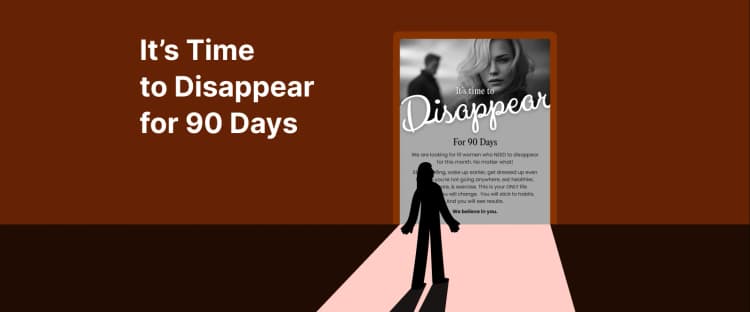
Have you ever felt an overwhelming desire to disappear from the face of the Earth and completely reset your life?
Every woman has probably felt this way at least once. In this article, you'll learn how to "disappear" with a clear purpose — and come back lighter, more determined, and in control of your life.
Many women live on autopilot: they take care of the entire family, give their all at work (often without receiving the recognition they deserve), maintain relationships, organize the household, bottle up their emotions — and only realize the exhaustion when it turns into irritability, insomnia, or apathy.
The idea of disappearing for a month isn’t about disappearing from the world out of spite. It's about taking a strategic pause to reconnect with yourself.
To start a plan that respects your reality, it’s worth trying the Headway app to discover which themes might help in your current moment.
When a woman wants to transform, her main mistake is trying to change everything at once: radical diets, perfect routines, unrealistic goals.
The issue with this approach is that a noble objective ends up becoming just another source of pressure. A transformative month doesn’t need to be intense; it needs to be consistent and secure. The point isn’t to become as disciplined as a robot, but to reconnect with your inner self and achieve balance.
If you want to turn the next month into a process of identity transformation (not just tasks), start with a plan to become the person you want to be, and progress in small steps.
The goal of this article is to make it clear that sustainable female transformation happens when you reclaim three things — boundaries, presence, and intention. You’ll understand what it means to "disappear" in a healthy way, how to plan this break without guilt, and how to return with changes that last.
What does disappearing for a month look like in practice?
"Disappearing" isn’t about punishing others with a silent protest or abandoning your responsibilities. It's about reducing external noise to increase internal clarity.
Practically, it’s a period where you minimize distractions, unnecessary commitments, and the emotional exposure that drains your energy.
It’s also a month to exchange reactivity for choice. You decide what enters (information, people, demands) and what leaves (automatic guilt, comparisons, haste). Transformation comes from this shift in mindset.
You don’t need an expensive trip or total isolation on a mountaintop. What you need is boundaries and a pact with yourself: "For 30 days, I will treat myself as my number one priority, not as a consolation prize for my performance."
So, when the month is over, you won’t return with a list of goals. You’ll come back with new patterns: more presence in your body, more courage in difficult conversations, more calmness to say "yes" or "no."
Retreat is not escape: It’s energy reorganization
In The Power of Now, Eckhart Tolle talks about the cost of living constantly in "the future." A month off is a practice of presence: doing what you already do, but with less mental rush.
Here are some real-life examples: you take a shower thinking about emails you need to respond to; you eat while thinking about tasks that need to be completed by the end of the day; you sleep while worrying about problems you don’t know how to solve.
"Disappearing" is about interrupting that autopilot and returning to the present with your full mind. It’s learning to nourish your mind, body, and soul.
"The present moment is all you really have." — Eckhart Tolle
Boundaries are advanced self-care, not selfishness
In her book Set Boundaries, Find Peace, Nedra Glover Tawwab shows that boundaries aren’t about controlling others — they are about protecting your energy and your identity. Without boundaries, the month becomes just a quieter version of the same exhaustion.
A boundary can be something simple, like reducing conversations that always end in irritation, pausing invitations you accept out of fear of displeasing others, creating periods of time free from phones, messages, and social media. The effect is profound: you’ll feel that your life belongs to you again, and that you’re in control, instead of feeling like you’re watching your life pass by.
Real change begins when you stop repeating who you’ve been
In Breaking the Habit of Being Yourself, Joe Dispenza explores how repeated thoughts and emotions create a predictable identity. If you want to come back transformed, the month must include moments of self-observation: noticing which stories you repeat, which reactions control you, and which choices you avoid.
The goal isn’t to "be perfect." It’s to recognize the pattern before acting. It’s understanding how you can do things differently, as you realize it’s madness to expect better results while doing the same things you’ve always done. This, in itself, is a significant transformation.
The courage not to please: The muscle that frees your time
In The Courage to Be Disliked, Ichiro Kishimi and Fumitake Koga remind us of something tough yet liberating: living for the approval of others is an elegant prison. A month off often reveals how many things you do to maintain an image: the competent one, the strong one, the available one.
The practice here is gentle: choose one small situation each week to act with honesty, even if it’s uncomfortable. Transformation happens when you realize you can stand on your own.
"To be free is to be able not to be loved by everyone." — Ichiro Kishimi and Fumitake Koga
Small gestures, big change: The psychology of self-support
In The 5 Second Rule, Mel Robbins proposes a simple gesture as an anchor for self-confidence. The idea isn’t about the gesture itself, but its meaning: you become someone who supports herself.
During the month, choose one daily short ritual that symbolizes this: writing three lines, walking 10 minutes, drinking water calmly, or breathing before responding. You’re not "doing too little." You’re changing the relationship you have with yourself.
Strategies for disappearing for a month in 2025 without guilt (and without actually disappearing)
At work: Disappear from the excess, not from responsibility
Most women can’t simply leave their jobs. So the trick is to "disappear" from what’s unnecessary: manufactured urgencies, pointless meetings, messages that could wait, unspoken expectations.
Here are a few adjustments that usually bring quick relief:
Block off fixed time without meetings for focused work
Reduce notifications and check messages only at set times
Make a list of non-negotiable items for the month (sleep, meals, breaks)
The point isn’t to produce more, but to produce with less wear and tear. When you protect your energy, you return more creative and more assertive — even when calmly negotiating boundaries.
In personal life: A month to shed what drains your energy and nurture what sustains you
At this point, think in three layers: environment, relationships, and mind.
First, environment: what you see all day influences your peace. So, this month might include a "detox" from stimuli: less social media, less excessive news, fewer unrealistic comparisons. Not because the world is bad, but because your mind needs to breathe.
Next, relationships: choose two conversations you’ve been avoiding — one to ask for help, another to say a sincere "no." Female transformation is often about stopping being the one who handles everything alone.
Finally, mind and body: create a ritual of presence. It can be daily, short, and simple. The key is repetition: you reconnect with yourself every day, even for just a few minutes.
In education and learning: Learn to return more in control of your path
A month can also be a period of strategic learning — not to accumulate content, but to strengthen direction.
Choose a topic that can restore your autonomy: personal finance, assertive communication, leadership, self-care, boundaries, gentle productivity. Study in short blocks and apply what you’ve learned in small decisions: a more mindful purchase, a better conversation, a more aligned choice of schedule.
The secret is not to turn this into pressure. Learning here is support, not a test.
Recommended readings to disappear for a month and come back transformed
Set Boundaries, Find Peace by Nedra Glover Tawwab
This book is a straightforward and humane guide to setting boundaries without aggression or guilt. Tawwab shows that boundaries are a form of honesty: you say what’s possible for you and others. During your transformation month, this reading can help you identify where you’re neglecting yourself to maintain harmony. It offers practical language to communicate changes firmly and respectfully.The Courage to Be Disliked by Ichiro Kishimi and Fumitake Koga
This work presents an accessible philosophical conversation about freedom, responsibility, and belonging. The central point is that much of our pain comes from trying to control how we’re seen. For your transformative month, this book is an anchor: you learn to orient yourself by values, not approval. It can change your schedule, relationships, and self-esteem.Breaking the Habit of Being Yourself by Joe Dispenza
The author proposes that change happens when you interrupt the cycle of "same thoughts, same emotions, same choices." This reading is helpful for those who feel they’re repeating patterns even when wanting to do differently. During your month, use this book as an invitation to self-observation, noticing triggers, reactions, and internal stories. Transformation comes when you stop being predictable to yourself.The Power of Now by Eckhart Tolle
Tolle offers a clear vision of presence and mental suffering. The Power of Now isn’t a book of "quick fixes"; it’s a repositioning: you learn to notice a thought without identifying with it. During your month off, this reading can help reduce anxiety and bring gentleness to your daily life. You’ll return transformed because you’ll return more present.The 5 Second Rule by Mel Robbins
Mel Robbins works with the idea of self-support as a daily practice. The impact isn’t in major revolutions, but in small signs you give yourself: "I’m capable of taking care of myself." During your renewal month, use this book to create a simple, repeated, symbolic ritual. This is how confidence grows: like a plant, not an explosion.
Headway helps you look within and make this a habit!
A well-lived month doesn’t make you "disappear." It helps you reappear in your own life: with clearer boundaries, more stable presence, and choices more aligned with your life goal.
If you want to start your transformation today, with a guided and gentle approach, download Headway and create a learning plan that combines self-care, focus, and real evolution.
Get the Headway app now!